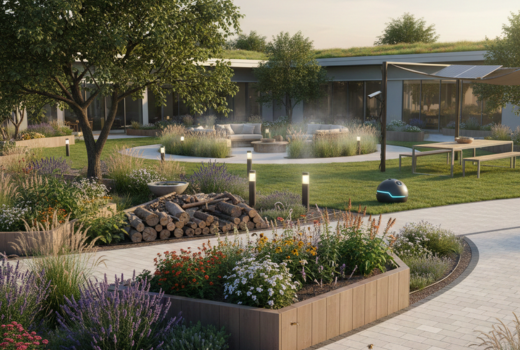
As we kick off the new year, the shift is undeniable: we are moving from aesthetic landscaping to functional, data-driven ecosystems.
Outdoor spaces are now expected to work harder – supporting sustainability goals, improving wellbeing, enhancing biodiversity and using technology to deliver smarter, more efficient results.
Here are the four key trends shaping the UK commercial landscape sector in 2026 and how your business can stay ahead of the curve.
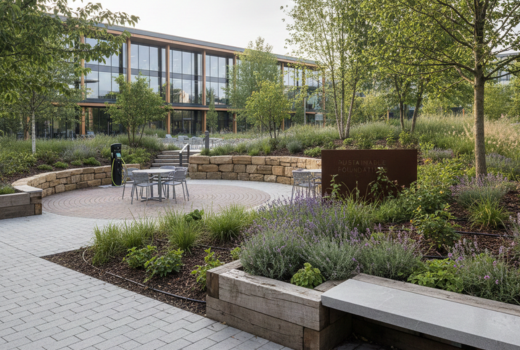
Sustainability Built In, Not Added On
By 2026, sustainability is no longer an optional extra – it’s the foundation of good landscape design.
Rather than retrofitting “green” features later, sustainability is now considered from the very first design stage. This ensures landscapes are more resilient, cost-effective and environmentally responsible over their entire lifespan.
Key elements include:
-
Eco-friendly hardscaping – permeable paving to reduce surface water run-off, responsibly sourced stone and materials with a lower carbon footprint.
-
Recycled and reclaimed materials – from paving and edging to furniture and structural elements, helping reduce waste and embodied carbon.
-
Efficient water use – drought-tolerant planting, improved soil structures and smarter irrigation strategies to cope with changing weather patterns.
For commercial sites, this approach not only supports ESG targets but also reduces long-term maintenance and replacement costs.
Smart Technology, Seamlessly Integrated
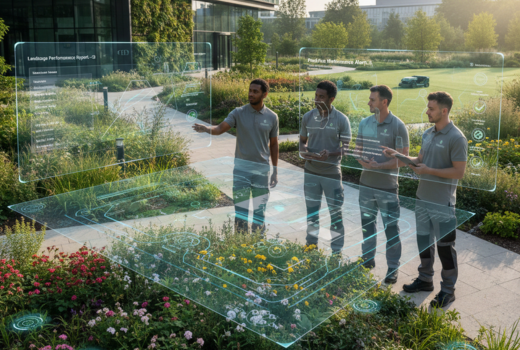
Technology is transforming how landscapes are designed, built and managed – but in 2026, the focus is on seamless integration rather than visible gadgets.
AI-driven tools are increasingly being used behind the scenes to improve accuracy, efficiency and reporting.
Emerging applications include:
-
AI-assisted site planning – analysing site conditions, usage patterns and environmental data to optimise layouts, planting schemes and drainage solutions.
-
Smarter reporting and asset management – automated reporting on landscape performance, maintenance schedules and compliance requirements.
-
Predictive maintenance – identifying potential issues before they become costly problems, helping facilities teams plan more effectively.
The result is a landscape that performs better, is easier to manage and delivers measurable value to stakeholders.
Wellbeing Gardens in Commercial Spaces
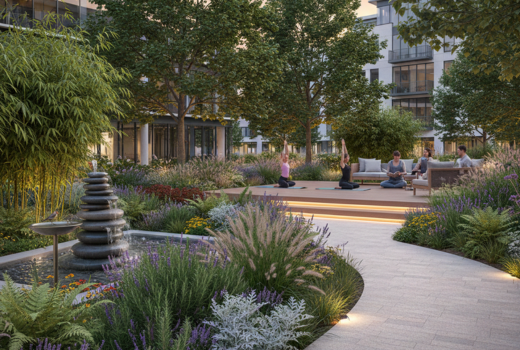
Employee wellbeing remains a major priority in 2026, and outdoor environments are playing a crucial role.
Wellbeing gardens are no longer limited to healthcare settings – they’re increasingly found in offices, business parks, educational facilities and mixed-use developments.
Key features include:
-
Sensory planting – aromatic herbs, textured foliage and seasonal colour to engage the senses.
-
Natural sounds – water features, rustling grasses and wildlife to help reduce stress and background noise.
-
Soft, low-level lighting – creating safe, calming environments without harsh glare.
-
Mindful spaces – dedicated areas for yoga, reading, informal meetings or quiet reflection.
These landscapes encourage people to step outside, take a break and reconnect with nature – improving focus, morale and overall wellbeing.
Biodiversity Net Gain (BNG)
With Biodiversity Net Gain now firmly embedded in planning requirements, biodiversity is a core consideration for commercial landscaping in 2026.
However, it’s about more than compliance. Thoughtfully designed landscapes can actively support local ecosystems while enhancing the visual appeal of a site.
Popular approaches include:
-
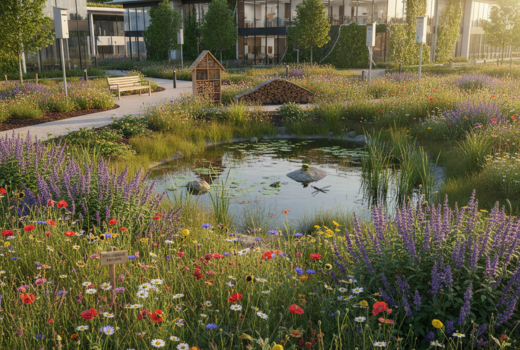
Pollinator-friendly planting – bee and butterfly borders, native wildflowers and pollen-rich shrubs that provide year-round food sources.
-
Integrated wildlife habitats – ponds, log piles, bird boxes and insect hotels built into the design rather than added later.
-
Small-scale rewilding – allowing certain areas to grow naturally, reducing maintenance and encouraging biodiversity to thrive.
These strategies help create resilient landscapes that support nature, reduce intervention and align with long-term environmental goals.
Designing for the Future
The commercial landscapes of 2026 are smarter, greener and more people-focused than ever before. Sustainability is built in from day one, technology works quietly in the background, wellbeing is prioritised, and biodiversity is actively encouraged.
For organisations investing in their outdoor spaces, these trends represent an opportunity – to create landscapes that not only look good, but deliver lasting environmental, social and commercial value.
By designing landscapes that support people, performance, and the planet, we help future proof commercial developments for the years ahead.
Ready to future-proof your next project? Explore our Commercial Landscaping Services: