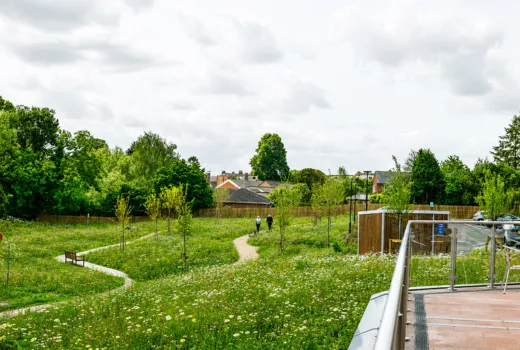
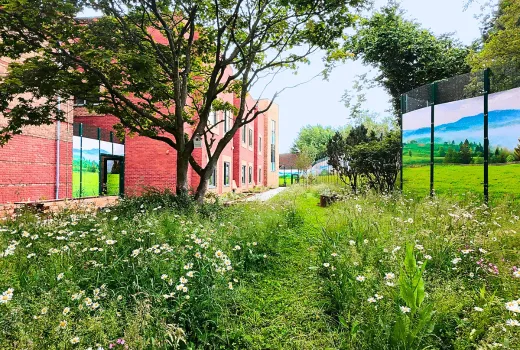
As sustainability becomes a greater priority across the built environment, wildflower planting is transforming the way commercial landscapes are designed and managed. Once considered a feature reserved for rural settings, wildflower meadows are now being incorporated into housing developments, commercial estates, schools, public open spaces and roadside verges throughout the UK.
Beyond their striking seasonal displays, wildflower areas deliver measurable environmental, ecological and financial benefits. They provide essential habitats for pollinators, contribute towards biodiversity objectives, and significantly reduce long-term maintenance requirements, making them a valuable addition to modern landscaping schemes.
Supporting Pollinators Through Thoughtful Landscape Design
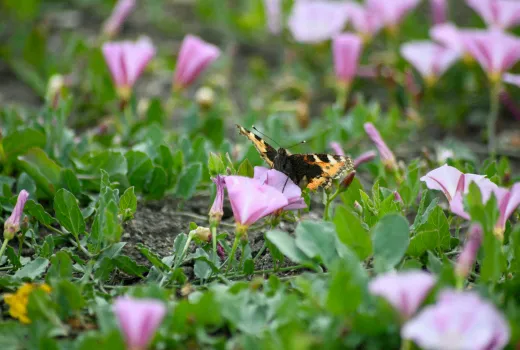
Pollinators including bees, butterflies, hoverflies and moths are essential to healthy ecosystems. They play a crucial role in the reproduction of flowering plants and food crops, yet their populations continue to decline due to habitat loss, urbanisation and changing land management practices.
Commercial landscaping has an important role to play in reversing this trend.
By introducing carefully selected native and pollinator-friendly wildflower species, developments can provide:
- Nectar and pollen throughout the growing season.
- Safe habitats for feeding, nesting and breeding.
- Diverse plant communities that support a wider range of insects.
- Green corridors that connect fragmented wildlife habitats.
Rather than creating purely decorative green spaces, well-designed wildflower areas become functioning ecosystems that support local biodiversity while enhancing the overall quality of the landscape.
Enhancing Biodiversity Across Commercial Developments
Biodiversity is no longer an optional consideration within landscape design. With increasing environmental expectations and the introduction of Biodiversity Net Gain (BNG) requirements, developers and landowners are seeking landscaping solutions that provide genuine ecological value.
Wildflower meadows are an effective way to increase biodiversity because they support significantly more plant and insect species than traditional amenity grassland. As these habitats mature, they help to:
- Encourage bees, butterflies and other beneficial insects.
- Provide food sources for birds and small mammals.
- Improve soil structure and microbial activity.
- Increase ecological resilience across a development.
- Create more natural and environmentally connected landscapes.
For landscape architects and developers, incorporating wildflower planting demonstrates a commitment to sustainable placemaking while creating outdoor spaces that continue to evolve and improve over time.
Reducing Landscape Maintenance Costs
One of the most significant commercial advantages of wildflower planting is its ability to reduce ongoing maintenance costs without compromising visual impact.
Traditional amenity grass typically requires:
- Frequent mowing throughout the growing season.
- Regular fertiliser applications.
- Irrigation during prolonged dry periods.
- Weed management and ongoing maintenance visits.
In comparison, established wildflower meadows generally require just one or two carefully timed cuts each year, alongside occasional management to maintain species diversity.
This reduction in maintenance delivers several long-term benefits, including:
- Lower labour costs.
- Reduced machinery usage.
- Less fuel consumption.
- Lower carbon emissions.
- Reduced water demand.
For housing developers, commercial estates, business parks, schools and public sector organisations managing large areas of open space, these efficiencies can result in substantial cost savings over the lifetime of a landscape.
Delivering Year-Round Visual Interest
Wildflower planting offers far more than environmental benefits. It also creates visually engaging landscapes that change naturally with the seasons.
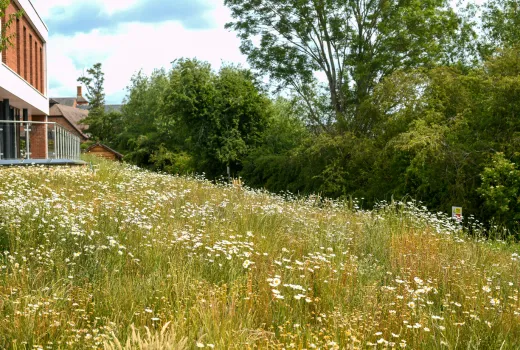
A carefully specified seed mix provides an ever-changing display of colour, texture and movement from early spring through to late autumn. Different flowering species emerge at different times, ensuring continuous seasonal interest while supporting pollinators throughout their active periods.
The result is a landscape that feels vibrant, natural and welcoming, helping developments stand out while creating enjoyable spaces for residents, employees and visitors.
Wildflower Areas Support Sustainable Development
As the construction and landscaping sectors continue to focus on sustainability, climate resilience and environmental stewardship, wildflower meadows have become an increasingly important component of commercial landscape design.
They deliver multiple benefits within a single landscape feature by:
- Supporting declining pollinator populations.
- Increasing biodiversity across developments.
- Contributing towards Biodiversity Net Gain objectives.
- Reducing maintenance costs and resource consumption.
- Enhancing the visual quality of commercial and residential environments.
- Creating greener, healthier places for people and wildlife.
When planned, established and managed correctly, wildflower areas offer long-term value that extends far beyond aesthetics.
Sustainable Commercial Landscaping with Jack Moody Landscaping
At Jack Moody Landscaping we understand that successful commercial landscaping must balance environmental responsibility with practical long-term performance.
From large-scale housing developments and commercial estates to public realm projects and infrastructure schemes, we install and maintain sustainable landscapes that deliver lasting value. Whether incorporating wildflower meadows, native planting or biodiversity-focused green infrastructure, our approach is centred on creating outdoor environments that are attractive, resilient and built to support future generations.
If you’re looking to incorporate wildflower planting into your next commercial landscaping project, our team can provide expert advice on species selection, establishment and long-term management to ensure your landscape performs both environmentally and commercially.
Learn more: https://www.jackmoodygroup.co.uk/services/landscaping-civil-engineering/wildflower-planting-services/